
CALL FOR AN
APPOINTMENT:
(989) 345-8113
APPOINTMENT:
(989) 345-8113
A complete eye exam is important to check the health of your eyes and vision. It begins with a review of your medical history and medications, since overall health can affect your eyes.
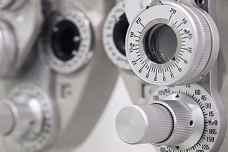
During the exam, your vision is tested with an eye chart, and sometimes a special instrument called a phoropter is used to correct refractive errors such as myopia, hyperopia and astigmatism. The phoropter is used to determine the prescription for glasses if they are required. Your eye movements, pupils, and side vision are also checked. The front of your eyes will be closely studied through a microscope and the back of your eyes will be examined with special lenses. This helps assess the health of the optic nerve, retina and blood vessels, and can detect signs of eye disease early.
Start here for your healthiest eyes.
Ogemaw Eye Institute is equipped with the latest diagnostic and examination technology. This allows us to provide patients with thorough, comprehensive eye exams, helping us monitor overall eye health, detect early signs of eye disease and determine if glasses or other treatments are needed.
A complete eye exam at Ogemaw Eye typically takes about 45 to 90 minutes and provides valuable information about your eye health. It typically includes the following:
• Medical History: Review of your overall health, vision concerns and medications that may affect your eyes
• Visual Acuity: You’ll read letters on an eye chart to measure how well you see at different distances, testing one eye at a time
• Pupils: A light is shined into your eyes to see how your pupils respond, abnormal reactions can indicate underlying issues
• Side Vision: This test checks your peripheral (side) vision, which can reveal early signs of glaucoma, neurologic problems or other eye conditions
• Eye Movement: An ocular motility test ensures your eyes move and align properly, assessing muscle coordination and the nerves that control the movements
• Prescription for Corrective Lenses: If glasses or contact lenses are needed, the best prescription will be determined using a phoropter (a device with multiple lenses)
• Eye Pressure: Tonometry measures the pressure inside your eyes to screen for glaucoma
• Front of the Eye: A slit lamp exam uses a microscope to closely inspect the eyelids, cornea, iris and lens for issues like cataracts or corneal damage
• Retina and Optic Nerve: After dilating your pupils, the retina, macula and optic nerve will be examined with a special lens to detect signs of disease (your eyes may be sensitive to light for a few hours afterward)
Additional Testing: If needed, Dr. Zelenak and his team may recommend further tests to monitor or detect eye diseases in their earliest stages.